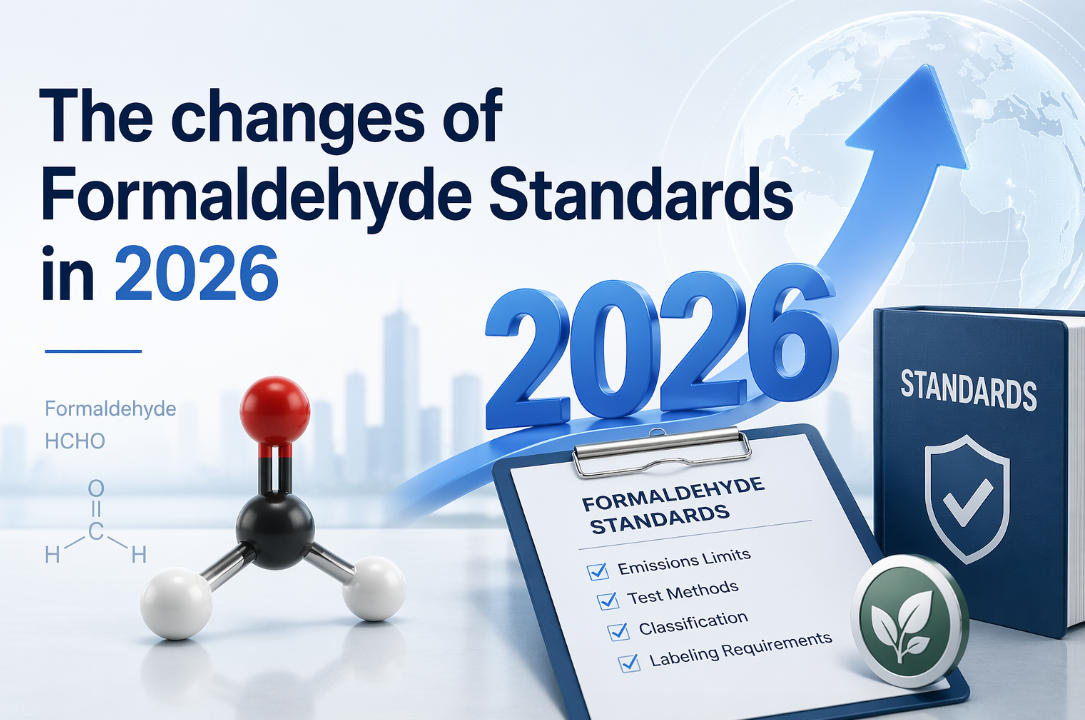
When come to 2026, the formaldehyde rules are tighter than before, especially in the major markets, including China, the EU, and the US.
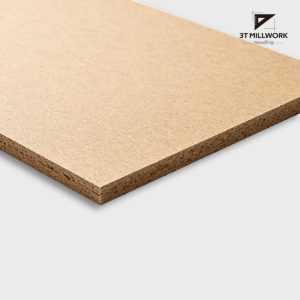
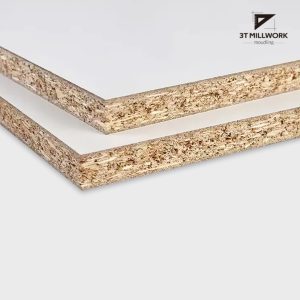
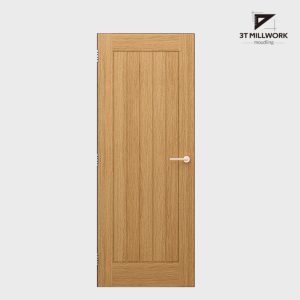
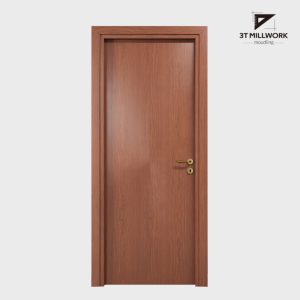
For the importers, they should be pay attention to these changes, you really can’t ignore. If the products you import don’t meet the requirements, They won’t be able to clear customs or enter your local market. The will include many products, the products made from the MDF board, particle board and plywood are the main products. Such as the MDF Architrave Mouldings, MDF interior door, and wall panel products
If the products can not meet the formaldehyde standard, means your products is not qualified, so your products will get held or rejected when clean the customs, there will be extra costs, and sometimes even losing orders. Let`s make brief introduction of the changes of Formaldehyde Standards of China, EU and the US.
1. China: The standard is GB 18580-2025
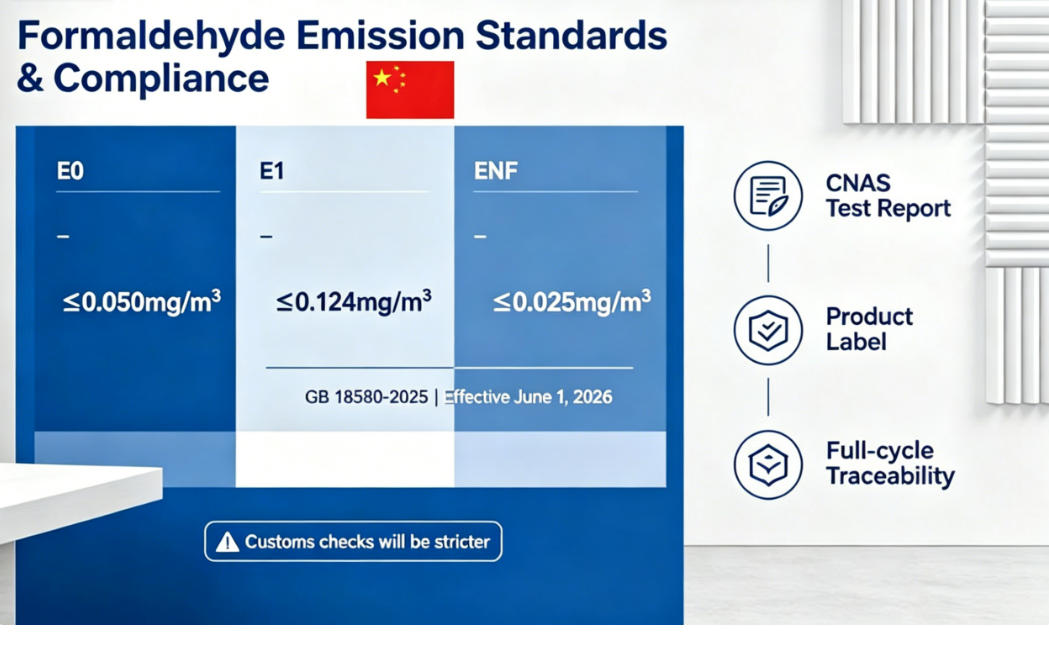
The new GB 18580-2025 standard will be applied in China from June 1, 2026. You can see the requirement is clearly stricter now. The previous E1 level (≤0.124 mg/m³) is basically being phased out. Going forward, E0 (≤0.050 mg/m³) will be the standard most buyers expect. So if your products is E0 MDF, you need to check the formaldehyde standard of your board after June. For some projects, especially higher-end ones, clients may even ask for ENF level (≤0.025 mg/m³).Importers should be prepared for:
- 1> CNAS lab test reports
- 2>Clear product labeling
- 3>Full traceability
Customs checks will be stricter. Non-compliant goods may be returned or destroyed. Especially for the interior useage products, such as white shiplap, acoustic slat wall panel, they must meet the standard to ensure the health.
2. EU: REACH Update
From August 6, 2026, the EU will apply updated rules under REACH Annex XVII. The emission limit is ≤0.062 mg/m³, tested with EN 717-1.
Importers need to make sure:
- 1>Test reports are valid
- 2>Documents are complete
- 3>Supply chain is traceable
If the product doesn’t meet the requirement, it won’t be allowed into the EU.
3. US: TSCA Title VI
The US keeps the same limits under TSCA Title VI:
Hardwood plywood: ≤0.05 ppm
MDF: ≤0.06 ppm
Particleboard: ≤0.09 ppm
In 2026, enforcement will focus more on:
TPC certification
Labeling
Traceability
False claims like “formaldehyde-free” can lead to penalties.
4. What Importers Should Do
1
Work with the right suppliers
Choose suppliers who can meet E0 or ENF levels. Low-emission adhesives like MDI are becoming standard.
2
Check before shipment
Do testing based on the target market. Don’t wait until customs.
3
Prepare documents carefully
Use reports from recognized labs (CNAS / ILAC). Make sure labels are clear.
4
Reduce risk
Clear old stock early. Keep backup suppliers. Plan for higher costs.
Conclusion
The trend is clear: lower emissions and stricter control. For importers, this is about staying in the market. If you prepare early, it’s manageable. If not, the risk is high.