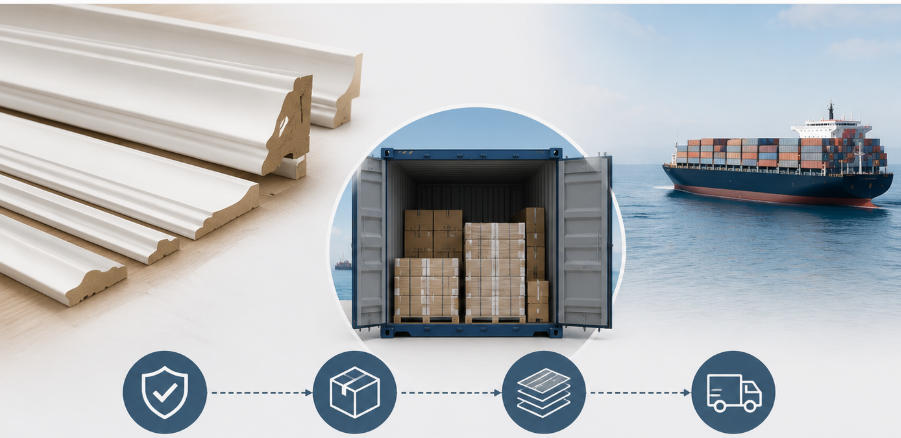
MDF baseboards, door casings, ceiling moldings and other wooden decorative profiles feature thin, elongated bodies and fragile edges, which demand comprehensive protective measures throughout transportation. Ocean freight remains the primary shipping solution for export trade. For buyers with modest order volumes, consolidated LCL delivery serves as a more cost-effective alternative. This paper elaborates on the concept of LCL containers, analyzes the respective merits and drawbacks of LCL shipments to illustrate inherent transit hazards, and introduces a complete set of standardized reinforced packaging protocols, assisting manufacturers of wooden decorative trims in minimizing cargo damage ratios.
1.Basic Definition: What Is an LCL Container?
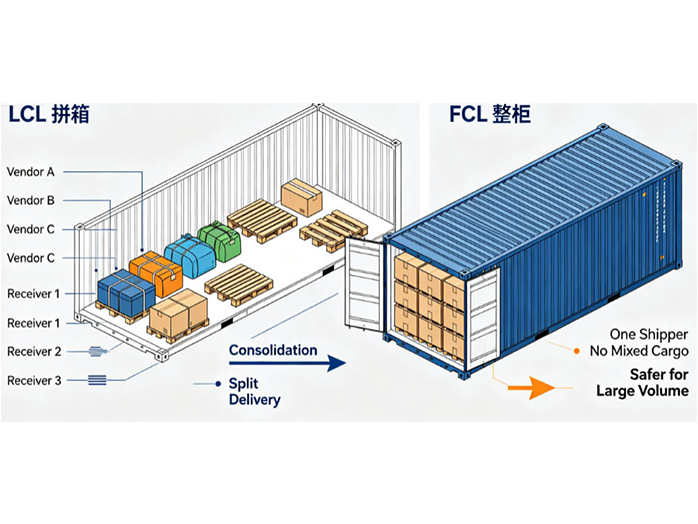
LCL stands for Less Than Container Load. An LCL container means one single shipping container loaded with cargo belonging to different vendors and separate receivers.
Freight forwarders gather small consignments from dozens of factories, consolidate all goods into one 20GP or 40HQ container for sea transport. Once the vessel arrives at the destination port, staff will unload the whole container and split all packages for respective delivery to each client.
In contrast, FCL (Full Container Load) refers to a container occupied entirely by goods of one single shipper, with no cargo mixing with third-party items. LCL logistics fits shipments with total volume under 15 cubic meters, such as sample lots, small retail restocks and mixed small orders with assorted trim profiles. Mass engineering orders with large cubage usually adopt FCL delivery for better product protection.
2.1 LCL Shipment: Strengths & Drawbacks for Moulding Export

Low shipment threshold with less capital occupation
There is no requirement to fill a full container. Exporters can arrange shipments with only a few cubic meters of goods, easing inventory pressure for small batch transactions and new customer trial cooperation.
Transparent charging rules for tiny orders
Carriers calculate freight fees based on actual occupied volume. For low-cubage consignments, merchants do not need to bear full container charges, which controls overall logistics expenditure effectively.
High flexibility for segmented orders
Suppliers can ship multiple moulding specifications in separate batches, matching scattered purchasing demands from local hardware retailers and small interior contractors overseas.
2.2 Major Shortcomings of LCL Transport
Extremely high risk of physical damage
Containers contain mixed loads ranging from heavy stone slabs, metal hardware to bulky furniture. No independent partition space is reserved for fragile timber trims. Longshoremen often carry out rough lifting and stacking work, leading to cracked corners, dented bodies and scratched primed surfaces on mouldings.
Longer overall transit cycle
Forwarders have to wait until enough small consignments are collected before arranging container loading and vessel booking. Normally LCL shipments take 3 to 7 more days than FCL ones; waiting periods will double during peak shipping seasons.

Extra miscellaneous charges for medium & large volumes
Additional fees cover warehouse consolidation, terminal deconsolidation and sorting labor. If shipment volume exceeds 15 CBM, the unit cost per cubic meter will surpass FCL options significantly.
Weak cargo management & higher inspection risks
Packages from various suppliers are piled together, so worn shipping labels may lead to misdelivery or lost small trim pieces. Customs also select LCL containers for random checks more frequently, bringing extra delays to delivery schedules.

3. Full Reinforcement Packaging Standard for Mouldings in LCL Consignments
First of all, moisture prevention is the top priority.
Every individual package must be fully wrapped with stretch film or thick PE waterproof membrane to create a complete barrier isolating the mouldings from external humidity. This layer of sealing protection can effectively stop mildew growth and substrate deformation even after long ocean transit.
Secondly, all goods shall be consolidated into palletized loads
Secure several product bundles as one pallet using packing straps, pallet packaging firmly bundles multiple cartons into one unified unit. It not only eliminates cargo shifting during shipment, but also avoids partial loss of goods caused by scattered, separated packages.
sturdy exterior protective packing
To avoid collision damage with other cargo inside the container, the whole pallet load should be further covered with wooden crates or heavy-duty reinforced cartons. This extra outer shielding delivers superior impact resistance and thoroughly safeguards decorative mouldings against bumps and abrasions.
Container Loading Cooperation With Forwarders
Communicate logistics agents ahead of stuffing work. Request palletized mouldings to be placed in the central zone of the container, fixed with inflatable dunnage bags to fill side gaps. Keep all trim pallets far away from metal, stone and other rigid heavy cargo.
Conclusion
LCL shipping works well for small-batch export orders with flexible volume requirements. However, since goods are consolidated with other merchants’ shipments and undergo repeated loading, unloading and transshipment, robust protective packaging and clear shipping marks are absolutely essential. Whenever the cargo volume permits, FCL full-container delivery remains the recommended transport solution.